

Online payment services have become a core part of how businesses sell, operate, and scale. Whether it’s an eCommerce store, SaaS platform, subscription business, or retail brand, customers now expect fast, secure, and flexible checkout experiences across websites, apps, invoices, and mobile devices.
The payment experience directly impacts revenue. According to the Baymard Institute, the average cart abandonment rate is nearly 70%, often caused by slow, complicated, or unclear checkout flows.
At the same time, digital wallets, bank-based payments, and instant checkout options are reshaping customer expectations. Businesses now need modern online payment services that support multiple payment methods, strong security, seamless integrations, and long-term scalability.
This guide explains what online payment services are, how they work, key features to look for, and how to choose the right payment platform in 2026.
What Are Online Payment Services?
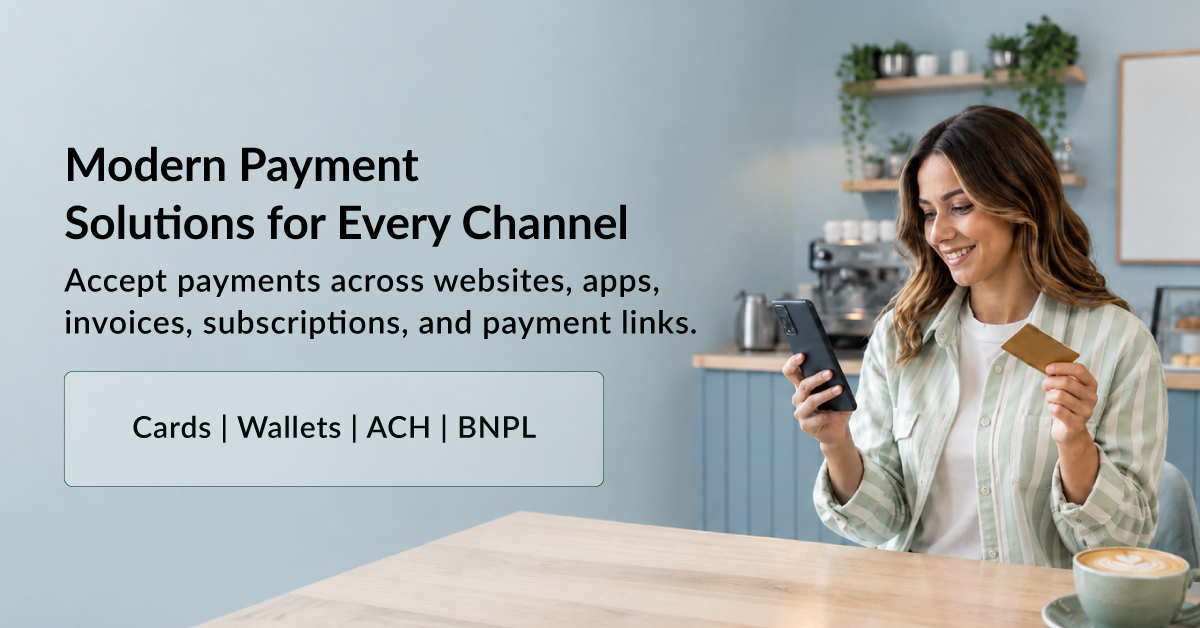
Online payment services are digital systems that allow businesses to accept, process, and manage payments electronically.
These platforms connect customers, merchants, banks, card networks, and payment processors to complete secure transactions in real time.
Common payment methods supported:
- Credit and debit cards
- Digital wallets (Apple Pay, Google Pay, etc.)
- ACH and bank transfers
- Buy Now, Pay Later (BNPL)
- Pay-by-bank systems
- Payment links
- Online invoices
- Subscription billing
- Recurring payments
Instead of managing multiple disconnected systems, businesses now prefer unified payment platforms that combine payment acceptance, reporting, fraud protection, and integrations in one solution.
Payment Gateway vs Payment Processor vs Payment Platform
These terms are often used interchangeably, but they serve different roles:
Payment Gateway
A payment gateway securely captures and transmits customer payment data to the processor. It is mainly used for online checkout, payment links, and invoice payments.
Payment Processor
A payment processor handles the authorization of transactions between banks, card networks, and merchant accounts. It ensures payments are approved or declined and completed successfully.
Payment Platform
A payment platform is a complete solution that includes gateways, processing, reporting, fraud protection, integrations, and omnichannel payment management.
For growing businesses, a full payment platform is often more efficient than using separate tools.
Why Modern Online Payment Solutions Matter for Business Growth
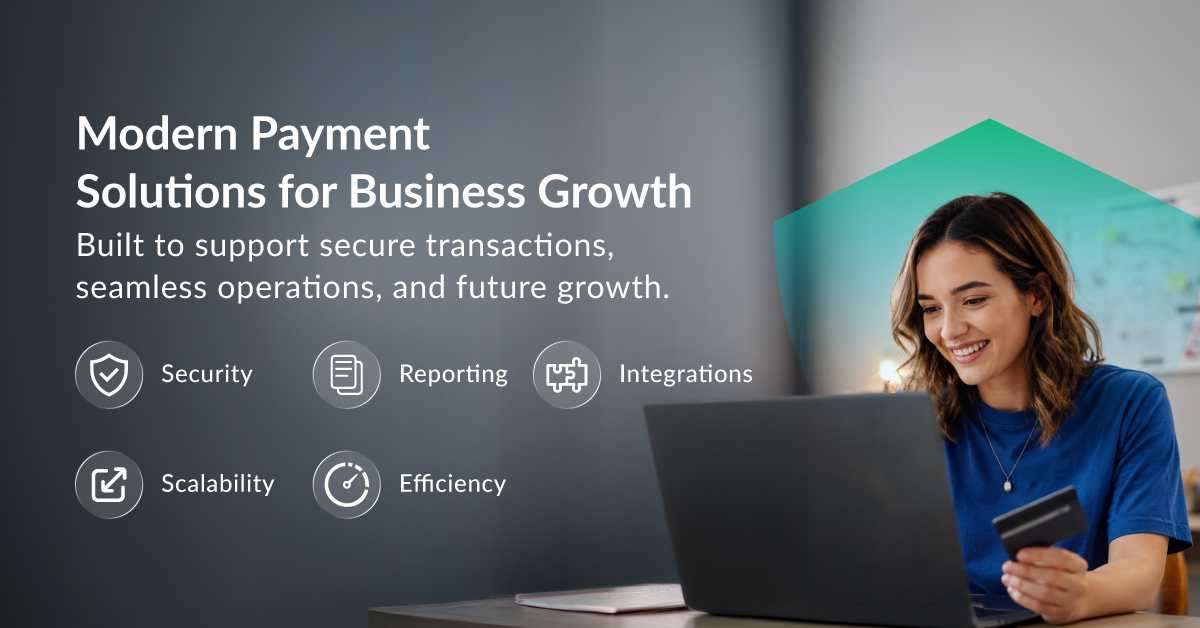
Online payment systems are no longer just infrastructure, they directly impact revenue, customer experience, and operational efficiency.
Modern online payment solutions help businesses:
- Improve checkout experiences
- Strengthen payment security
- Support multiple payment methods
- Gain better visibility into payment activity
- Integrate with existing business systems
- Reduce manual processes
- Improve operational efficiency
- Scale across multiple sales channels
Faster Checkout Experiences
Customers expect frictionless checkout. Features like saved cards, digital wallets, one-click payments, and mobile-optimized checkout flows significantly improve conversion rates.
Security and Fraud Protection
Security is a top priority in digital payments. Modern platforms use:
- Encryption
- Tokenization
- Multi-factor authentication
- Fraud detection systems
- AI-based monitoring
These tools reduce risk and protect sensitive customer data.
Better Reporting and Insights
Payment dashboards provide visibility into:
- Transactions
- Refunds
- Settlements
- Revenue trends
- Payment success rates
This helps businesses make data-driven decisions.
Seamless Integrations
Modern payment platforms integrate with:
- Shopify, WooCommerce, Magento
- CRM systems
- ERP tools
- Accounting software
- SaaS platforms
This reduces manual effort and improves operational efficiency.
Scalability for Growth
As businesses grow, they need systems that support:
- Higher transaction volumes
- Multi-channel payments
- Subscription billing
- International expansion
A scalable payment system ensures smooth growth without switching platforms frequently.
Online Payment Trends Shaping 2026
AI-Powered Fraud Detection
AI is increasingly used to detect suspicious transactions and reduce fraud in real time.
Growth of Digital Wallets
Wallet-based payments are becoming standard due to speed and convenience.
Embedded Payments
SaaS platforms and marketplaces are embedding payments directly into their systems for seamless user experiences.
Real-Time Payments
Faster settlement systems are improving cash flow for businesses.
Pay-by-Bank Growth
Direct bank payments are gaining adoption for subscriptions, invoices, and high-value transactions.
Best Online Payment Services Comparison (New York)
| Platform | Best For (New York Businesses) | Pricing Type | Key Strength |
|---|---|---|---|
| Valor PayTech | Merchants, ISVs, and omnichannel businesses | Custom pricing | Unified payments across online, in-store, and software systems |
| Stripe | SaaS companies and E-commerce businesses | Transaction-based | Powerful APIs, subscriptions, and global scalability |
| PayPal | Small businesses, freelancers, and online sellers | Transaction-based | High trust, fast checkout, and wide customer adoption |
| Square | Retail stores, restaurants, and service businesses | Transaction-based | POS and online payments in one ecosystem |
| Adyen | Enterprise and global businesses | Custom pricing | Unified commerce across countries and channels |
| Authorize.net | Established businesses needing a gateway | Monthly + transaction fees | Secure gateway with strong fraud protection tools |
Best Online Payment Services & Platforms for Businesses
1. Merchants & ISVs (Valor PayTech)
Merchants and software providers often need unified payment infrastructure that works across online, in-store, and embedded systems.
Key capabilities include:
- Omnichannel payment acceptance
- Smart terminal integration
- Real-time reporting and analytics
- Embedded payments for software platforms
Best suited for: Businesses that want scalable, all-in-one payment infrastructure.
2. SaaS & E-commerce Businesses (Stripe)
Startups and digital-first businesses widely use Stripe for its developer-first approach.
Key advantages:
- Subscription and recurring billing
- Flexible API integrations
- Global payment support
- Fast checkout customization
Best suited for: Tech startups and online businesses.
3. Small Businesses & Freelancers (PayPal)
PayPal remains one of the most recognized online payment methods.
Key benefits:
- Easy onboarding
- Strong customer trust
- Quick checkout experience
- Widely accepted payment option
Best suited for: Small sellers, freelancers, and service providers.
4. Retail & Restaurants (Square)
Square is widely used by businesses that operate both online and in physical locations.
Key strengths:
- Built-in POS system
- Inventory and sales tracking
- Easy setup for stores and restaurants
- Unified online and offline payments
Best suited for: Brick-and-mortar businesses expanding online.
5. Enterprise & Global Businesses (Adyen)
Large enterprises rely on Adyen for unified payment processing across multiple markets.
Key strengths:
- Multi-country payment support
- Advanced reporting dashboards
- High-scale infrastructure
- Omnichannel commerce support
Best suited for: Large-scale global operations.
6. Gateway-Focused Businesses (Authorize.net)
Many businesses use Authorize.net for reliable payment gateway services.
Key benefits:
- Secure payment gateway
- Fraud detection tools
- Recurring billing support
- Stable infrastructure
Best suited for: Businesses needing traditional, secure payment processing.
Types of Online Payment Platforms
Understanding different platform types can help businesses choose the right solution.
All-in-One Payment Platforms
All-in-one platforms combine payment gateway tools, processing support, reporting, fraud protection, and payment management in one system.
Embedded Payment Systems
Embedded payments are built directly into software platforms such as SaaS tools, marketplaces, or industry-specific platforms. This allows users to accept payments without leaving the software experience.
Omnichannel Payment Platforms
Omnichannel platforms support payments across online, mobile, in-store, invoice, and software-led channels with connected reporting and transaction visibility.
How to Choose the Right Online Payment Service
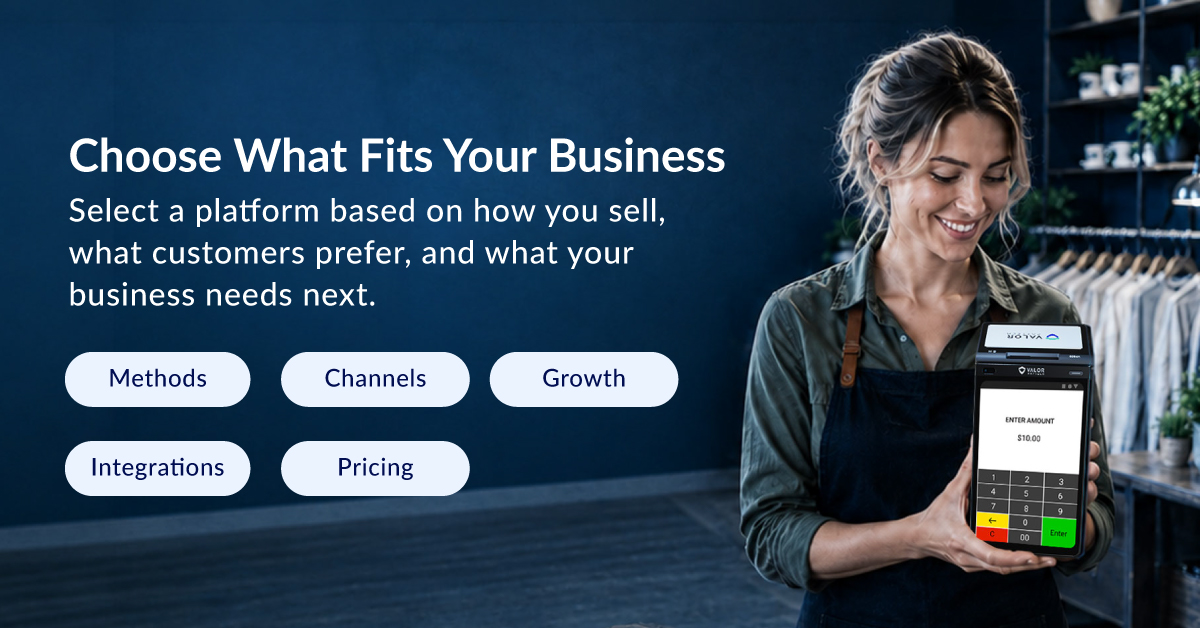
The right online payment service depends on business needs, customer behavior, and long-term goals.
Before choosing a provider, businesses should ask:
- What payment methods do my customers prefer?
- Do I need online payments, in-person payments, or both?
- Do I need recurring billing or subscription support?
- What integrations are required?
- How strong is the fraud protection?
- How clear is the reporting?
- How fast are payouts?
- Does the platform support future growth?
- Is the pricing clear and easy to understand?
- Does the provider support my industry or business model?
A strong payment platform should align with how the business sells, operates, and grows.
Each provider offers a different mix of functionality, pricing, and scalability. The right fit depends on your business model, geography, and technical needs.
Conclusion
The best online payment services and platforms in 2026 are not defined by features alone. They are defined by how well they support customer experience, business operations, security, and long-term scalability.
Businesses should focus on payment security, flexible payment methods, system integrations, reporting, pricing clarity, checkout performance, failed payment recovery, and growth support when choosing a provider.
The right platform is more than a payment tool. It becomes part of the business infrastructure that supports smoother operations, better visibility, and future growth.
FAQ
1. What are online payments?
Online payments are digital transactions where customers pay for goods or services through the internet using cards, wallets, or bank transfers.
2. How are online payments processed?
Online payments are processed through a secure system that verifies the payment, gets bank approval, and transfers funds to the business after authorization.
3. Why do online payments fail?
Online payments can fail due to insufficient funds, incorrect details, bank restrictions, expired cards, or security checks by fraud detection systems.
4. Are online payments secure for businesses?
Yes, online payments are secure because they use encryption, tokenization, and fraud monitoring to protect customer and transaction data.
5. Can online payments be accepted without a website?
Yes, businesses can accept online payments through payment links, QR codes, invoices, and mobile apps without needing a full website.
6. Which Online Payment Service Is Best for My Business?
The best online payment service depends on your business type and payment needs. For example, Valor PayTech is ideal for merchants and ISVs, Stripe for SaaS and eCommerce businesses, and Square for retail and restaurant businesses.
7. Do online payment services support international payments?
Many online payment services allow businesses to accept payments from customers in multiple countries and currencies.
9. Can online payment services integrate with business software?
Yes, many providers integrate with eCommerce platforms, accounting software, CRM systems, and other business tools.
10. What should businesses consider when choosing an online payment service?
Businesses should evaluate payment methods, security features, integration options, pricing, and scalability before selecting a provider.
Ready to get started?
Become a Partner Today!
Complete the form below.